
PeelSub Launches Batch Hard Subtitle Removal Services
PeelSub is now live, providing managed batch removal of burned-in subtitles for videos that need further editing, translation, subtitle replacement, or multi-platform distribution
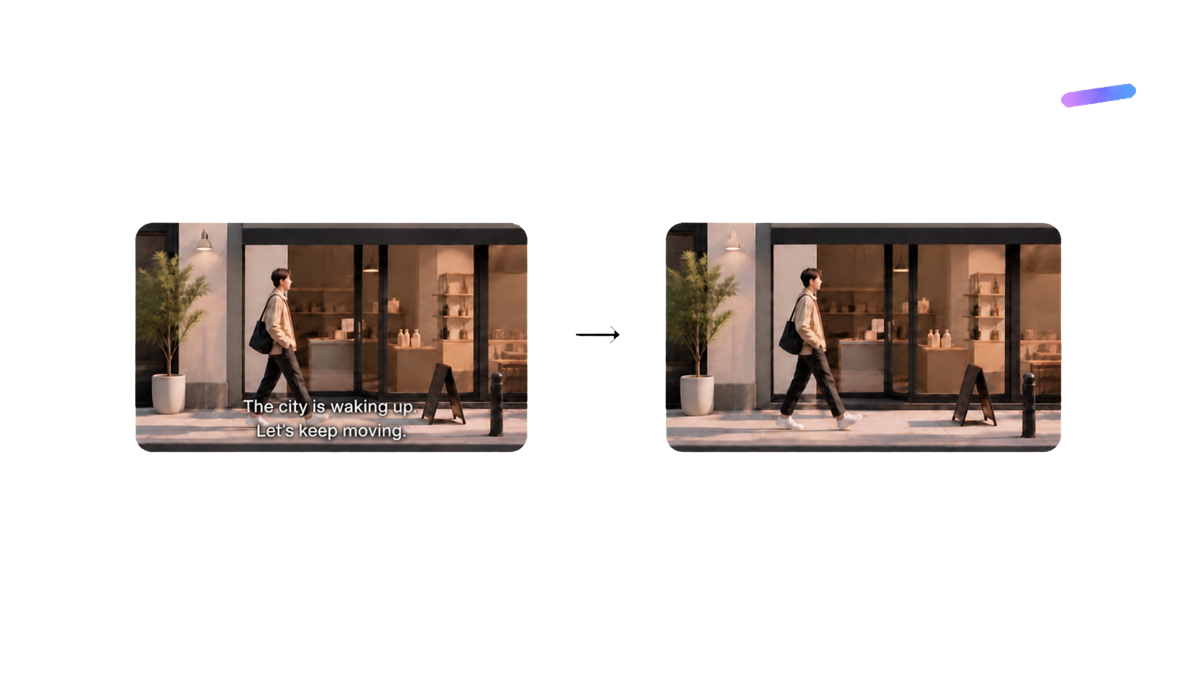
PeelSub is now live. We provide managed batch hard subtitle removal for videos in which subtitles have already been burned into the image. The service helps content teams prepare reusable video versions for further editing, translation, subtitle replacement, course updates, and distribution across different platforms when a clean master is no longer available.
Burned-in subtitles are part of the video image. They cannot be switched off like an SRT, VTT, or selectable subtitle track. The background behind the subtitles, movement in the shot, scene cuts, effects, and the quality of the source video all influence how the footage can be processed and what result is realistic. For that reason, PeelSub does not apply one fixed promise to every file. We first review the batch scope, then examine representative footage and confirm the processing boundary and acceptance criteria before full production begins.
What we launched
PeelSub is a managed batch service for removing hard subtitles and organizing the processed results for the next production step. A project can begin with a description of the video count, total duration, subtitle position, visual conditions, and intended use. After an initial scope review, we confirm the material handoff method and select footage that represents the actual difficulty of the batch.
During production, each source video maps to one processed result. Base filenames and batch relationships remain clear, and the original audio is retained by default. Before delivery, we check for missed or incorrectly processed files, broken file mapping, and visible problems such as subtitle remnants, flicker, or changes in the processed area during playback. Results are organized by batch so that they can move directly into editing, translation, subtitle production, or archiving workflows.
PeelSub combines scope confirmation, sample review, batch processing, quality checks, and delivery acceptance. It is a managed service rather than a browser-based self-service tool. The Contact form is used to understand the project scope and does not accept source videos or media links. A separate material handoff method is confirmed after the initial review.
What PeelSub does
When subtitles have been composited into the picture, disabling subtitles in a player will not remove them. If a subtitle-free master still exists, using that master normally preserves the most image information and should be considered first. Many content libraries, however, only retain a published or exported version with hard subtitles. That creates a practical obstacle when the video needs to be localized into another language, updated, repackaged, or edited again.
PeelSub identifies the subtitle regions that need to be processed across a batch, uses surrounding visual information and frame continuity to address the covered area, and delivers a set of video files that correspond one to one with the sources. Before work begins, we confirm what is included, which complex shots require closer review, and how the receiving team will evaluate the delivery.
Results depend on the footage. Fixed subtitle positions over continuous, relatively simple backgrounds are generally better suited to batch processing. Difficulty increases when subtitles cover faces, product details, animated charts, on-screen text, or rapidly moving subjects. Frequent cuts, motion blur, heavy compression, low resolution, and repeated transcoding can also reduce the visual information available. In these cases, reviewing representative footage is more reliable than estimating from duration alone.
The core workflow
1. Confirm the batch scope
Start with the video count, individual and total duration, resolution, subtitle position, general visual conditions, and intended next use. If the batch includes different aspect ratios, sources, or subtitle layouts, identify those variations early. This helps determine whether the batch should be divided into separate processing groups and what handoff method is appropriate.
2. Review representative footage
A useful sample reflects real project difficulty instead of showing only the easiest scene. It should include subtitles crossing people or products, rapid movement and cuts, detailed textures, effects, lower-quality footage, and any change in subtitle position or style. Reviewing these segments helps define an acceptable result, identify shots that need extra attention, and reveal footage that should not enter the same batch process without an alternative plan.
3. Process the batch and run quality checks
Once the scope and review criteria are confirmed, the videos are processed as an organized batch. Quality review is not limited to whether one paused frame looks clean. It also considers continuity at normal playback speed: whether old subtitle outlines remain visible, whether the processed region flickers or drifts, whether background lines and subject edges change unexpectedly, and whether every source file has a corresponding result.
4. Organize delivery and acceptance
Processed videos are organized according to their batch and source-file relationships, with original audio retained by default. The receiving team can review file count, naming, playback integrity, audio and video properties, and the representative complex shots against the agreed scope. If translation or new subtitle burn-in comes next, the processed video can then enter the appropriate localization or post-production workflow.
Where PeelSub fits
Multilingual localization. When only a hard-subtitled version is available, handling the old subtitles before creating target-language subtitles can reduce visual conflict and make it easier to prepare separate versions for different markets.
Course and training updates. Dates, terminology, product interfaces, or instructions may change while the original subtitles remain embedded in the picture. Processing the old subtitles creates room for editing and for a new subtitle version that matches the updated content.
Existing video re-editing. Published videos may need to be shortened, restructured, repackaged, or combined with new openings and endings. Old hard subtitles can restrict cropping and layout decisions. A processed version gives the editing team more flexibility for the next cut.
Multi-platform distribution. Platforms differ in aspect ratio, subtitle-safe areas, and viewing conditions. Removing the original hard subtitles allows the content to be adapted to a new frame and subtitle specification rather than simply copying an old layout that may obstruct important information.
Batch organization for series and content libraries. Short dramas, courses, interviews, and media libraries often contain many episodes or files. Confirming scope, naming, and acceptance rules at batch level reduces repeated coordination and keeps each source clearly connected to its processed result.
Why it matters
Many content teams do not lack ideas or translation capability. The practical obstacle is that the only available asset is often a finished video with subtitles permanently embedded in it. Without a clean master, the old subtitles restrict translation, editing, and redistribution. Handling files one by one without a shared standard can also lead to inconsistent decisions, confusing filenames, and missed complex shots.
The value of batch hard subtitle removal is not simply making old text disappear from a paused frame. It is about returning a group of existing videos to a manageable production workflow. Representative sample review moves quality decisions earlier. A confirmed scope and consistent checks make schedule, fees, and acceptance depend on the real footage rather than on a generic duration estimate. For teams maintaining multilingual, frequently updated, or multi-platform video libraries, this repeatable process is easier to manage than a series of isolated fixes.
PeelSub does not promise identical results for every source. Occluded people, complex textures, rapid movement, and poor source quality may introduce limitations that cannot be ignored. We identify visible risks before full processing and confirm whether the batch should proceed as planned or whether particular shots need another approach.
What to prepare for an initial review
To help us assess the project efficiently, prepare the following information:
- Video count, individual duration, and total duration
- Resolution, aspect ratio, frame rate, and approximate file size
- Subtitle position, line count, style, and whether the layout changes
- Representative footage with complex backgrounds, occlusion, movement, or cuts
- The intended next step: editing, translation, subtitle replacement, or multi-platform distribution
- Preferred delivery format, priority, and acceptance concerns
If a clean master, editing project, or higher-quality source may still be available, mention that as well. We will first consider whether a more direct route exists before recommending hard subtitle removal.
Related links
Learn more: PeelSub batch hard subtitle removal
Ready to review a batch: Submit your requirements and contact sales