
What Does Good Hard-Subtitle Removal Actually Look Like?
Good subtitle removal is not just invisible text: the footage must stay natural in motion and remain usable for editing and localization.
A frame can look acceptable when paused and still fail the moment the video plays. A blurred strip begins to shimmer. A person crossing the subtitle area appears to lose part of a sleeve. A moving background breaks where the old text used to be.
For content teams, these are not cosmetic details. Subtitle removal is usually an upstream step. The footage still needs to support new captions, a different edit, a localized release, or a platform-specific version. If the image has been damaged, every downstream version inherits the problem.
Invisible text does not automatically mean clean footage
Masks and blur can make burned-in subtitles unreadable, but they do not reconstruct what the subtitles covered. On a static background, the compromise may be easy to miss. On faces, clothing, props, lighting changes, or camera movement, the treated area can become more distracting than the original text.
That is why subtitle-removal QA should include normal-speed playback, not just enlarged still frames. Watch the former subtitle region as subjects enter and leave it. Look for residual characters, flicker, color blocks, broken texture, and sudden changes in sharpness.
If viewers keep noticing the area where the subtitles used to be, the removal is not finished.
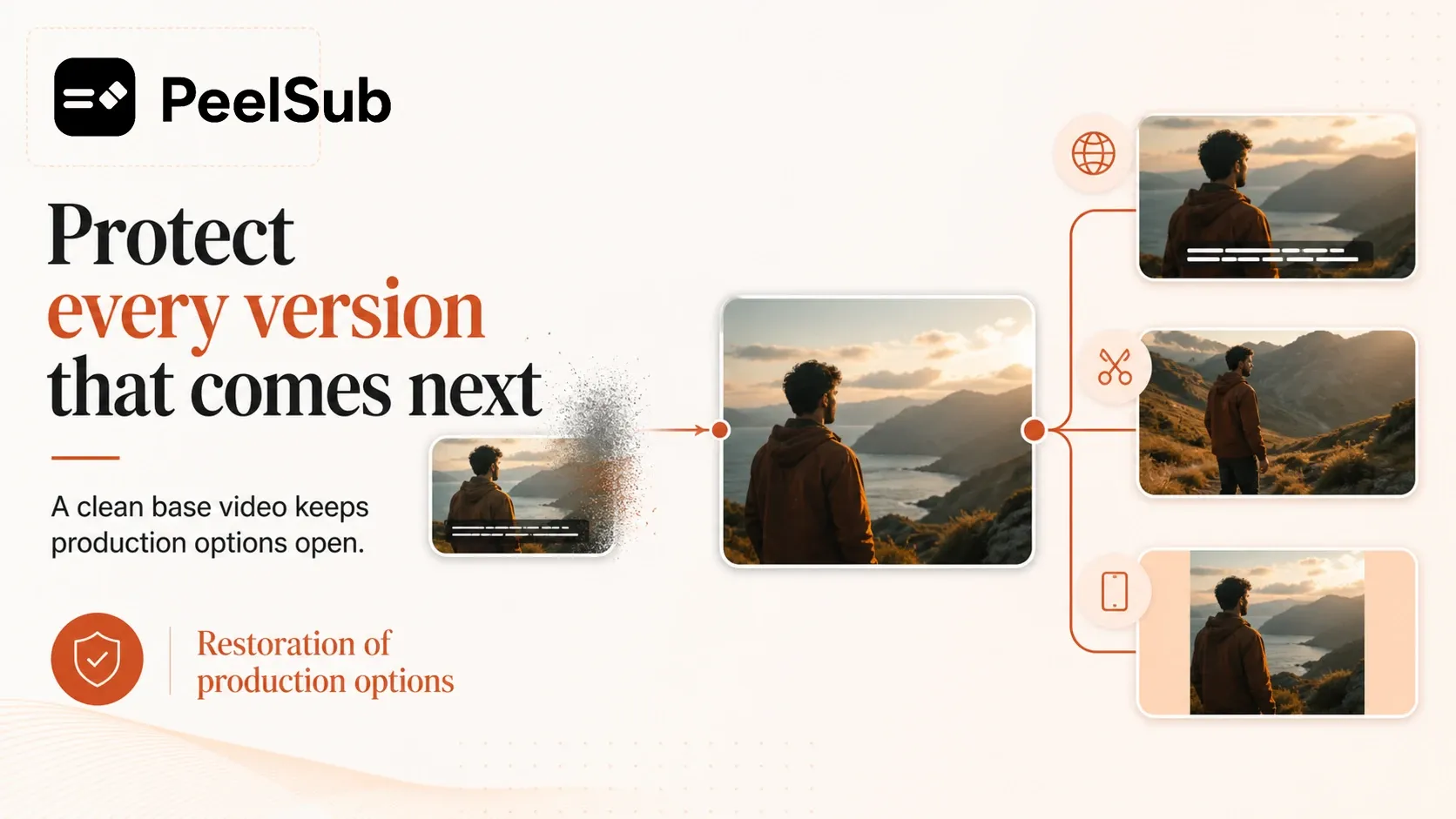
A clean base video protects every version that comes next
For a localized short drama, the next subtitle track may use different line lengths, font sizes, and positions. A course may need revised terminology. A library title may be cut into new formats. All of those options depend on having a usable visual base.

When the old subtitle area has been heavily blurred, a new caption layer often makes the quality mismatch more visible. The team loses layout flexibility and may have to return to the original material—or rebuild the edit—after time has already been spent on translation and design.
The value of subtitle removal is therefore not simply the absence of old text. It is the restoration of production options.
Complex scenes reveal whether the result will hold up
The most useful samples are not the easiest ones. They include the conditions that expose failure:

• subtitles crossing faces, hands, products, or detailed clothing
• moving textures, changing light, or active backgrounds
• rapid cuts and changes in subtitle position or style
• compressed or low-resolution source footage
These scenes show whether the subtitle region remains coherent from frame to frame. They also make it possible to define an acceptable result before processing an entire batch. No responsible workflow should promise perfect recovery of detail that no longer exists beneath burned-in text; the practical goal is a consistent result that meets an agreed visual standard.
PeelSub delivers cleaned video, not another editing task
PeelSub is a managed service for batch hard-subtitle removal and localized frame repair. It is designed for teams that have finished videos with burned-in subtitles but no clean master.
The project begins by reviewing representative footage and confirming the subtitle area, difficult scene types, intended downstream use, output requirements, and acceptance criteria. PeelSub then processes the agreed batch, checks the files against the project scope, and organizes each result against its source video.
The standard outcome is a set of processed videos that can move into editing or localization, with the original audio retained by default and exceptions recorded rather than silently omitted.
Use downstream usability as the final test
A practical acceptance check asks three questions:
• Is the old hard subtitle gone within the agreed scope?
• Does the treated region remain visually stable during playback?
• Can the file move into its next production step without first repairing the removal work?
When all three answers are yes, subtitle removal has done its job.
If you have a batch of short dramas, courses, or archive videos with burned-in subtitles, share the number of files, representative difficult scenes, subtitle position, intended use, and required output. PeelSub can assess the batch and define a workable removal and delivery scope.
Learn more about PeelSub
Visit the website: Learn about PeelSub
Submit your subtitle removal project: Contact us